How a Bicycle Accident Lawyer Helps Identify All Liable Parties
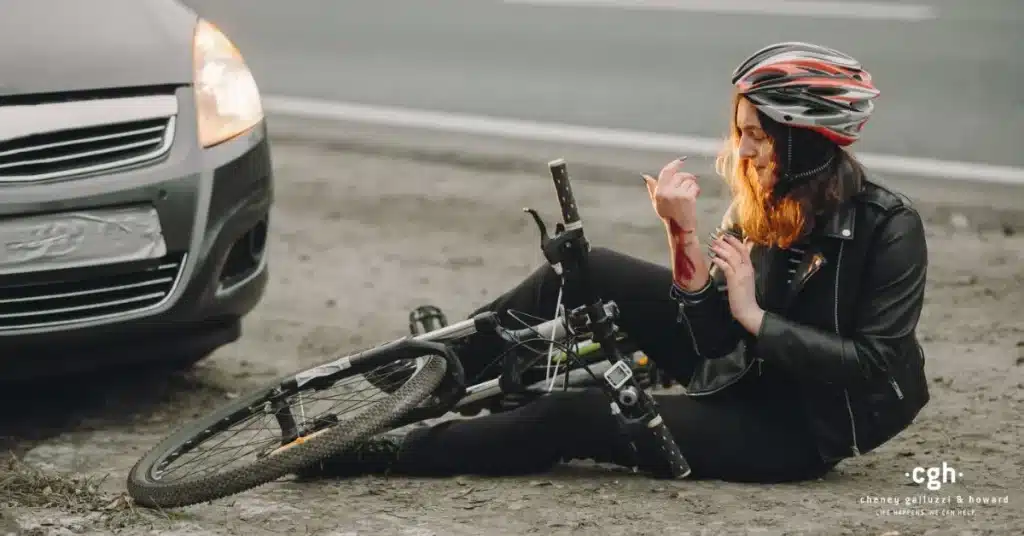
A bicycle crash rarely tells a simple story. From the curb, it can look like a driver turned left, a cyclist went down, and fault begins and ends there. In practice, liability often spreads wider. A delivery van may have been operating on a punishing schedule set by an employer. A rideshare driver may have stopped in a bike lane where local law clearly forbids it. A city may have ignored a dangerous road defect for months. A brake failure may trace back to a bad repair, a defective part, or both.
That is one reason injured riders often call a Bicycle Accident Lawyer early, even before the insurance adjusters finish their first round of questions. The legal work is not just about putting a dollar value on medical bills. It is about identifying every person, company, and public entity that contributed to the crash, then building a defensible case against each of them before evidence fades.
That matters because bicycle injury claims are often underpaid when the case is framed too narrowly. If the only target is an individual driver with a modest policy limit, the available recovery may fall far short of the rider’s losses, especially when the injuries involve surgery, head trauma, chronic pain, or months away from work. When a lawyer uncovers additional liable parties, the financial picture can change substantially.
Why liability is often broader than it first appears
Cyclists are exposed in a way drivers are not. Even a low speed collision can produce a fractured wrist, broken clavicle, pelvic injury, facial trauma, or concussion. Yet the mechanisms behind those injuries are often layered. A rider may swerve to avoid a car door, hit a pothole while trying to recover, then get struck by a second vehicle. Which event caused which injury becomes important, but so does the question of who set the sequence in motion.
The law Bicycle Accident Lawyer usually does not require only one wrongdoer. More than one party can share fault. In many states, fault is apportioned by percentage. One defendant may be 60 percent responsible, another 25 percent, and another 15 percent. The cyclist may also carry some share if the facts support it, though insurers often overstate that point.
A seasoned lawyer begins by resisting the neat, single-cause narrative that insurance companies prefer. Instead, the lawyer looks at the crash as an event system. What happened in the ten seconds before impact, the two hours before impact, and even the weeks before impact if roadway maintenance or mechanical failure played a role? That wider lens often reveals liability that police reports never mention.
The driver is only the starting point
Motor vehicle drivers remain the most common defendants in bicycle cases for a reason. Left hook turns, right hooks across bike lanes, unsafe passing, distracted driving, speeding, failure to yield, and dooring are common patterns. But even here, an experienced Bicycle Accident Lawyer looks beyond the person holding the steering wheel.
If the driver was working at the time, the employer may be liable. A florist making deliveries, a cable technician traveling between appointments, a home health aide on the clock, or an Amazon-style contractor under heavy route pressure may all create corporate exposure. The legal theory is often straightforward: when an employee causes harm within the scope of employment, the employer may be responsible. That can open access to a commercial policy rather than just a personal auto policy.
The details matter. Was the driver commuting, or already performing job duties? Was the vehicle owned by the company, leased, or personally owned but used for work? Was the worker truly an independent contractor, or treated so much like an employee that the label may not hold up under scrutiny? These are not technicalities. They can decide whether the claim is capped by a small individual policy or backed by a much larger business policy.
I have seen cases where an initial claim was framed as a routine intersection collision, only for phone records and delivery app timestamps to show the driver was rushing to complete a paid order. That changed not only the source of coverage, but the leverage in settlement negotiations.
When the vehicle owner is not the driver
Ownership and operation are different questions. The person who caused the impact may be a teenager driving a parent’s SUV, a friend borrowing a truck, or an employee using a fleet vehicle. A lawyer investigates who owned the car, who insured it, and whether anyone negligently entrusted it to an unsafe driver.
Negligent entrustment claims can arise when someone lends a vehicle to a person they know, or should know, is unlicensed, intoxicated, inexperienced, or medically unfit to drive safely. These claims are fact-sensitive and not available in every case, but they are worth examining when the facts point that way.
Commercial ownership adds another layer. If the vehicle was rented, leased, or fleet-managed, records from the company may show maintenance lapses, prior safety complaints, or ownership structures that affect insurance coverage. In serious injury cases, those threads deserve attention early.
Employers, contractors, and delivery platforms
The growth of app-based work has made bicycle crash cases more complicated. A driver making food delivery or courier runs may appear to be a private motorist, but the app history can place the driver in active service when the collision occurred. That distinction may affect which insurance policy applies and whether a platform-related policy is available.
Not every platform can be sued in the same way, and the law differs by state. Some companies classify drivers as independent contractors and argue they are not responsible for ordinary negligence. Sometimes that defense holds. Sometimes the facts support claims based on negligent hiring, retention, supervision, or policy design. A lawyer will not assume the answer from the marketing label on the app.
Traditional employers create more familiar routes to liability. If a company hired a driver with repeated moving violations, ignored prior crash complaints, failed to train on urban cycling risks, or pressured workers into unrealistic time windows, the case may extend beyond simple vicarious liability into direct negligence. That can matter in settlement posture because it paints a fuller picture of preventable risk.
Public entities can be liable, but timing is unforgiving
Roadway design and maintenance issues play a larger role in bike crashes than many people realize. Cyclists are uniquely vulnerable to hazards that barely register for cars. A shallow rut near a railroad track, uneven pavement in a bike lane, poor drainage that leaves slick algae near a curb, missing signage, debris from ongoing roadwork, or a traffic signal that fails to detect bicycles can all contribute to a crash.
Suing a city, county, or state agency is possible in some circumstances, but it is not simple. Government claims often come with special notice requirements and much shorter deadlines than ordinary injury claims. Miss that deadline, and a valid claim can disappear before the case really begins.
A Bicycle Accident Lawyer who regularly handles these cases knows to ask early whether the roadway itself played a role. That means obtaining maintenance records, prior complaints, work orders, design plans, and photographs of the condition before repairs are made. It may also mean examining whether a bike lane was striped in a way that steered riders into a door zone or forced them through a known conflict point.
Public entity cases are rarely built on outrage alone. They turn on notice, foreseeability, and whether the condition was dangerous under the governing legal standard. A lawyer helps separate a genuinely actionable roadway defect from a frustrating but noncompensable inconvenience.
Construction companies and private property owners are often overlooked
Not every dangerous road condition belongs to the city. Contractors performing utility work, paving, sidewalk repair, or building construction can create hazards that injure cyclists. Steel plates, loose gravel, poorly marked trenching, abrupt lane shifts, and blocked bike lanes with no safe detour are familiar examples.
In those cases, a careful lawyer looks at permits, site control, traffic control plans, and subcontractor relationships. The party that created the hazard is not always the party named on the nearest truck. Sometimes a general contractor delegates traffic control to a subcontractor. Sometimes a property developer controls the site access. Sometimes a utility company opened the pavement and left the area in a dangerous condition.
Private property owners can also share blame when a crash grows out of unsafe ingress and egress. Think of a commercial parking lot exit with obstructed sightlines, a business whose landscaping blocks the view of approaching cyclists, or a valet operation that repeatedly sends cars across a busy bike route without proper controls. These are less common cases, but they are real, and they often go unexamined when everyone focuses only on the impact vehicle.
Product defects and bad repairs can shift the entire case
Some bicycle crashes start before any car enters the frame. A fork fails under normal riding load. A quick-release skewer is improperly assembled after a tune-up. Hydraulic brakes lose pressure because a line was damaged in service. A helmet fails to perform as expected because it was counterfeit or past a critical recall. E-bike battery systems and throttles add a new set of failure points.
Product liability and negligent repair claims require a different kind of investigation. The damaged bicycle must often be preserved in its post-crash condition. Well-meaning family members sometimes ruin evidence by having the bike repaired or discarding broken components. That can make it much harder to prove whether the part failed before impact or because of impact.
Here, the lawyer may bring in an engineer, a bicycle mechanic with forensic experience, or both. The goal is to determine whether a manufacturing defect, design defect, or repair error contributed to the crash or worsened the injuries. In one recurring pattern, a rider is blamed for “losing control,” but the front wheel was not secured correctly after a recent repair. In another, a tire bead separates at speed because the wrong rim and tire combination was used. Those cases demand technical proof, and they can involve shops, distributors, manufacturers, and importers.
Bars, restaurants, and social hosts, in the right case
Alcohol-related bicycle crashes are not limited to drunk drivers. When a motorist who strikes a cyclist was overserved at a bar or restaurant, a lawyer may explore whether state dram shop laws create liability for the establishment. These laws vary sharply. Some states allow meaningful claims in overservice situations. Others are far narrower, or focus on service to minors.
Social host liability can also arise in limited settings, again depending on state law. These claims are never automatic. They depend on specific statutes and evidence of service, impairment, and causation. Still, in catastrophic injury cases, they are important to examine rather than dismiss out of hand.
The early investigation is where hidden defendants are found
Many of the best liability findings come from the first few weeks after the crash. Surveillance footage gets overwritten. Delivery app data disappears. Vehicles are repaired. Weather changes wash away skid marks or debris patterns. Witnesses grow less certain.
That is why early case work often shapes the entire claim. A strong lawyer does not wait passively for the police report. The investigation usually starts with scene photos, nearby camera canvassing, witness interviews, and record requests aimed at insurance coverage, employment status, vehicle ownership, and roadway maintenance history.
Certain evidence is especially easy to lose:
- helmet and bicycle in post-crash condition
- body camera or dash camera footage
- app logs, GPS data, and phone records
- business surveillance from nearby stores or homes
- roadway condition photos taken before repairs or cleanup
Each item can identify an additional liable party or undermine a weak defense. A grocery store camera may capture that a truck was parked in the bike lane moments before impact. A repair invoice may show the bike shop touched the exact component that later failed. A city work order may confirm prior complaints about the same pothole.
Police reports help, but they do not decide the case
People often assume the police report settles fault. It does not. Reports can be useful, especially for contact information, scene observations, and citations issued. But officers usually arrive after the event, often interview only a limited set of witnesses, and may not understand cycling dynamics in detail.
I have seen reports label a crash “cyclist lost balance” when video later showed the rider had swerved to avoid a car door opening directly into the lane. I have seen reports omit a road defect because it was outside the officer’s immediate focus. A lawyer treats the report as one piece of the file, not the final word.
That approach also matters when the report blames the cyclist. Riders are frequently accused of being hard to see, moving too fast, or “coming out of nowhere.” Those phrases often collapse under careful reconstruction. Visibility studies, signal timing, line-of-sight analysis, and video review can tell a different story.
Comparative negligence is where good lawyering earns its keep
Even when multiple defendants are Bicycle Accident Lawyer in play, the defense will often try to push fault back onto the cyclist. The common themes are familiar: no lights, dark clothing, lane position, speed, headphone use, failure to signal, or not wearing a helmet. Some of these facts may matter. Some are distractions. Helmet use, for example, may have no bearing on who caused the collision, though it can become a damages issue in some jurisdictions.
A good Bicycle Accident Lawyer does not deny bad facts. The job is to put them in legal and practical context. If a driver turned across a marked bike lane without yielding, the rider’s bright clothing will not rescue that maneuver. If a truck blocked the bike lane and forced the cyclist to merge left, the merge has to be analyzed against the hazard that created it.
Comparative negligence rules differ by state. In some places, a partially at-fault cyclist can still recover damages reduced by their percentage of fault. In others, recovery may be barred if the cyclist crosses a certain threshold. Those rules affect strategy from the start, including which defendants to pursue and how to frame the story of the crash.
Insurance coverage often reveals why every liable party matters
Finding liability is only half the job. The other half is connecting liability to available insurance and assets. A serious bicycle injury can easily produce six figures in losses, and severe cases can climb far higher when surgery, rehabilitation, or permanent limitations are involved.
Suppose a distracted driver carries only the state minimum policy. If that driver was also making deliveries, a commercial policy may come into play. If the roadway was dangerous and the city had prior notice, a public entity claim may add another source of recovery. If a defective helmet worsened a head injury, a product claim may address a different slice of damages and causation.
This is one of the practical reasons lawyers cast a wide net. It is not about suing everyone in sight. It is about identifying every party whose negligence played a meaningful role, then matching that liability to realistic sources of compensation.
Expert work is often the bridge between suspicion and proof
Clients often sense that more than one thing went wrong. They know the bike lane was badly designed, or the driver was working, or the brake felt wrong after service. Intuition helps, but courts and insurers pay claims based on evidence.
Experts turn suspicion into proof. Accident reconstructionists measure speed, sightlines, and impact points. Human factors experts analyze perception and reaction time. Engineers examine failed components. Road design experts assess whether a lane configuration created an unreasonable risk for cyclists. Vocational and medical experts explain how the injuries affect work and daily life.
Not every case needs a team of specialists. In a clean liability rear-end crash, it may be unnecessary. But when multiple parties are in the frame, experts often clarify who did what and how those actions combined to cause harm.
A realistic example of multi-party liability
Imagine a commuter riding home in the bike lane at dusk. A rideshare vehicle stops illegally in the lane to drop off a passenger. The rider checks over a shoulder and moves left to go around. At that moment, a delivery van turns right across the cyclist’s path. The rider brakes hard, but the front wheel washes out on loose gravel left from nearby utility work. The cyclist goes under the side of the van and suffers a fractured pelvis and wrist.
At first glance, the delivery van driver seems to be the case. A closer look widens it. The rideshare driver created an illegal obstruction. The delivery driver may have failed to yield before crossing the bike lane. The delivery company may be liable if the driver was on duty. The utility contractor may share fault for leaving gravel in the lane without proper cleanup or warning. If city records show repeated complaints about that same work zone, the public entity may also become relevant, though that claim would need careful legal screening.
No single fact guarantees liability against each party. The point is that a serious bicycle crash can be the product of overlapping negligence, and missing one actor can leave substantial compensation on the table.
What injured cyclists can do before fault is fully sorted out
The hours after a crash are chaotic. Pain, adrenaline, and insurance calls make it hard to think clearly. Still, a few practical decisions can preserve the foundation of a strong case. Get medical care promptly, even if the injuries seem manageable. Take photos of the scene, the bicycle, the helmet, clothing, the vehicle or vehicles involved, and any road hazard. Keep the bike exactly as it is. Do not authorize repairs. Save receipts, discharge paperwork, and messages related to work or app activity if any vehicle appears tied to a business.
It also helps to be cautious with recorded statements. Early adjuster questions often sound routine, but they are designed to pin down a narrow version of events before all facts are known. A lawyer can usually help control that process and make sure important avenues of investigation are not closed too soon.
Why thorough party identification changes the outcome
The strongest bicycle injury cases are not always the ones with the most dramatic photos. They are often the ones investigated deeply enough to tell the whole truth. Liability in a bike crash can extend from a careless driver to an employer, a contractor, a city, a product manufacturer, a repair shop, or a business whose operations created the hazard. Sometimes several of them belong in the same case.
That is the practical value of an experienced Bicycle Accident Lawyer. The lawyer does not just file a claim against the most obvious defendant. The lawyer asks who else had control, who created risk, who ignored warnings, who supplied the defective part, who set the schedule, who blocked the lane, who owned the vehicle, who maintained the road, and who insured it all. Those questions are what turn a thin claim into a complete one, and in serious injury cases, they can make the difference between a token settlement and a recovery that actually reflects what the cyclist lost.
CGH Injury Lawyers
2701 Lawrence St Suite 201
Denver, CO 80205, United States
Phone: +1 720-669-8062
FAQ About Bicycle Accident Lawyer
Who is at fault if a car hits a bicycle?
Fault depends on the evidence and the traffic rules that applied to the collision. A driver, cyclist, or another party may share responsibility. Police reports, witness accounts, video, and the physical evidence can help establish what happened. A collision with a car does not automatically determine legal fault.
Can you sue someone for hitting you on a bike?
You may have a claim when another person's negligent conduct causes your injuries and losses. The available evidence, applicable deadlines, insurance coverage, and any shared fault affect your options. A lawyer can review the circumstances and explain whether an insurance claim or lawsuit is appropriate; compensation is not guaranteed.
What percentage does an injury lawyer usually take?
There is no single percentage that applies to every injury case. Many lawyers use a contingency fee based on a share of the recovery, with the terms stated in a written agreement. Ask how the percentage is calculated, whether it changes during litigation, and how case expenses are handled before signing.
Corrections
Spot something wrong? Send it to the desk and it gets fixed in the open.